The hardest ache can arrive after the workout is already over. Delayed-onset muscle soreness often begins 12 to 24 hours later and peaks around 48 hours, so a sensible approach to relieving muscle soreness after exercise starts with knowing what’s normal and giving your body time to recover.
If stiffness makes stairs, your commute or your next training session less comfortable, you’re not alone in wanting relief. The best response isn’t always to push through: gentle movement may help, while intense exercise on very sore muscles can make recovery harder.
This guide explains why soreness develops, how long it usually lasts and which signs call for medical care. You’ll also learn how massage and foam rolling may ease stiffness, which recovery habits can help, and how to build up exercise gradually to reduce soreness over time.
Key Takeaways
- Learn why unfamiliar or demanding workouts can leave specific muscles sore, and how rest and sleep support recovery.
- Know when delayed soreness commonly begins and peaks, so you can distinguish it from discomfort that starts during exercise.
- Explore how gentle movement, massage and foam rolling may ease stiffness, and why pressure should feel comfortable rather than painful.
- Find out how to build up training gradually and recognise warning signs, such as severe swelling or unusually dark urine, that need medical attention.
1. What causes sore muscles after a workout?
Post-workout soreness often follows unfamiliar effort, especially eccentric exercise, when a muscle tenses as it lengthens. Walking downhill, lunges and landing from jumps are common examples. This type of loading may be associated with temporary changes in muscle fibres and inflammation. The body’s response may support adaptation, but can leave the muscles you worked feeling tender or stiff. Soreness is not a reliable measure of fitness or workout quality.
Recovery varies with the workout’s intensity and the muscles involved. After a relatively light session, muscles may recover in 24 hours; after a more challenging workout, recovery might take two to three days. Intense exercise may take over 24 hours to recover from, so consider giving sore muscles time before demanding the same effort again. Gentle activity, such as an easy walk or relaxed cycling, may temporarily ease soreness and keep blood flowing without repeating the hard effort. Stop if movement increases pain.
Sleep gives the body time to recover after sports or other activity. Some people aim for at least 7 hours; a daily recovery routine may include 7 to 9 hours, depending on individual needs. After training, a snack with protein and carbohydrates may support recovery and restore energy. One post-workout meal suggestion is 25 grams of protein and 50 grams of carbohydrates within one hour of exercise, though needs vary. Replacing fluids lost during training may be helpful, and you may wish to consult a healthcare provider or dietitian before taking magnesium supplements, or explore integrative care resources such as Westridge Holistic medicine for comprehensive recovery and wellness support.
Ibuprofen and other non-steroidal anti-inflammatory drugs (NSAIDs) may ease occasional muscle pain, but painkillers don’t necessarily speed muscle healing. NSAIDs are not suitable for everyone; overuse carries risks and may affect training adaptation.
2. Delayed onset muscle soreness: How soon does it set in and how long can it last?
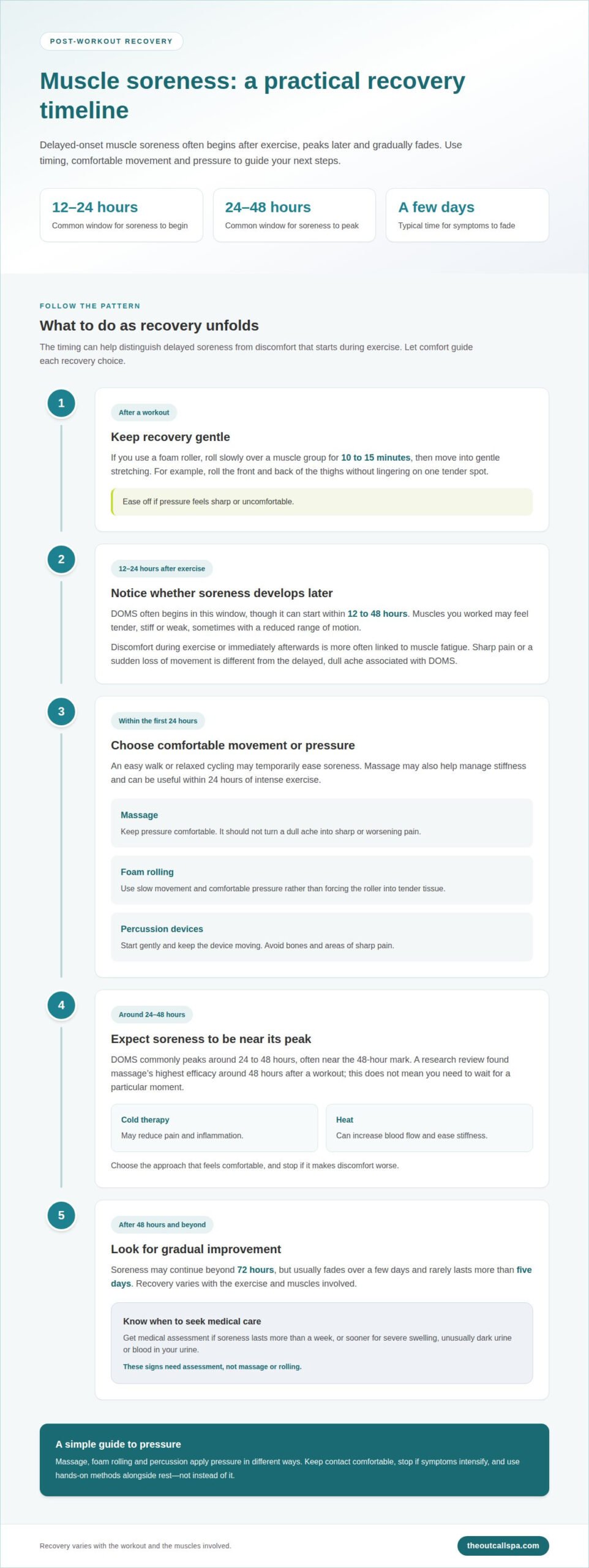
Delayed-onset muscle soreness (DOMS) is discomfort that develops after exercise, rather than during it. It often begins 12 to 24 hours after a workout, though onset can fall within 12 to 48 hours. The affected muscles may feel tender, stiff or weak, with reduced range of motion. These symptoms can follow unfamiliar or demanding activity as muscle tissue responds and repairs.
DOMS commonly peaks around 24 to 48 hours after exercise, often near the 48-hour mark. It may continue beyond 72 hours, but usually fades over a few days and rarely lasts more than five days. Recovery varies with the exercise and muscles involved; a challenging downhill run, for example, can leave the legs sore after the session has ended.
Timing helps distinguish DOMS from acute soreness. Discomfort during exercise or immediately afterwards is more often linked to muscle fatigue; delayed onset muscle soreness appears later. A dull ache in the muscles you worked, sometimes on both sides, can be normal. Sharp pain or a sudden loss of movement is different from this familiar post-exercise pattern.
Cold therapy may reduce pain and inflammation, while heat can increase blood flow and ease stiffness. Choose the approach that feels comfortable, and stop if it makes your discomfort worse.
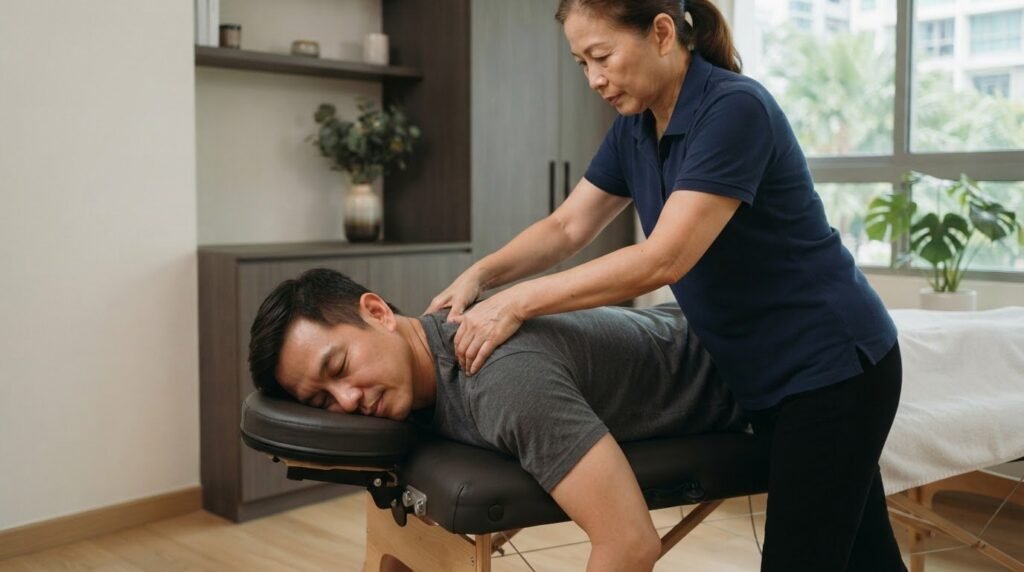
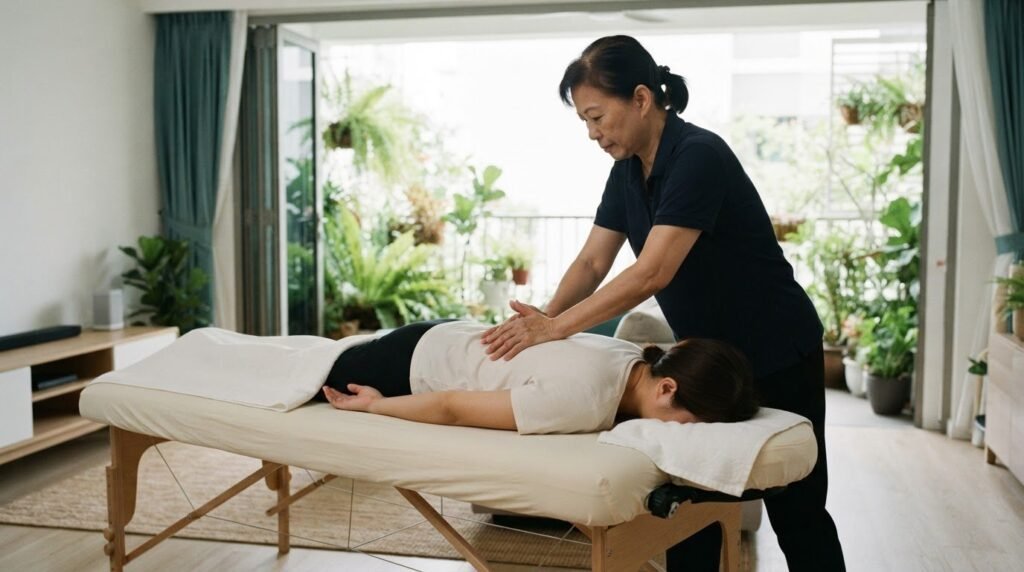
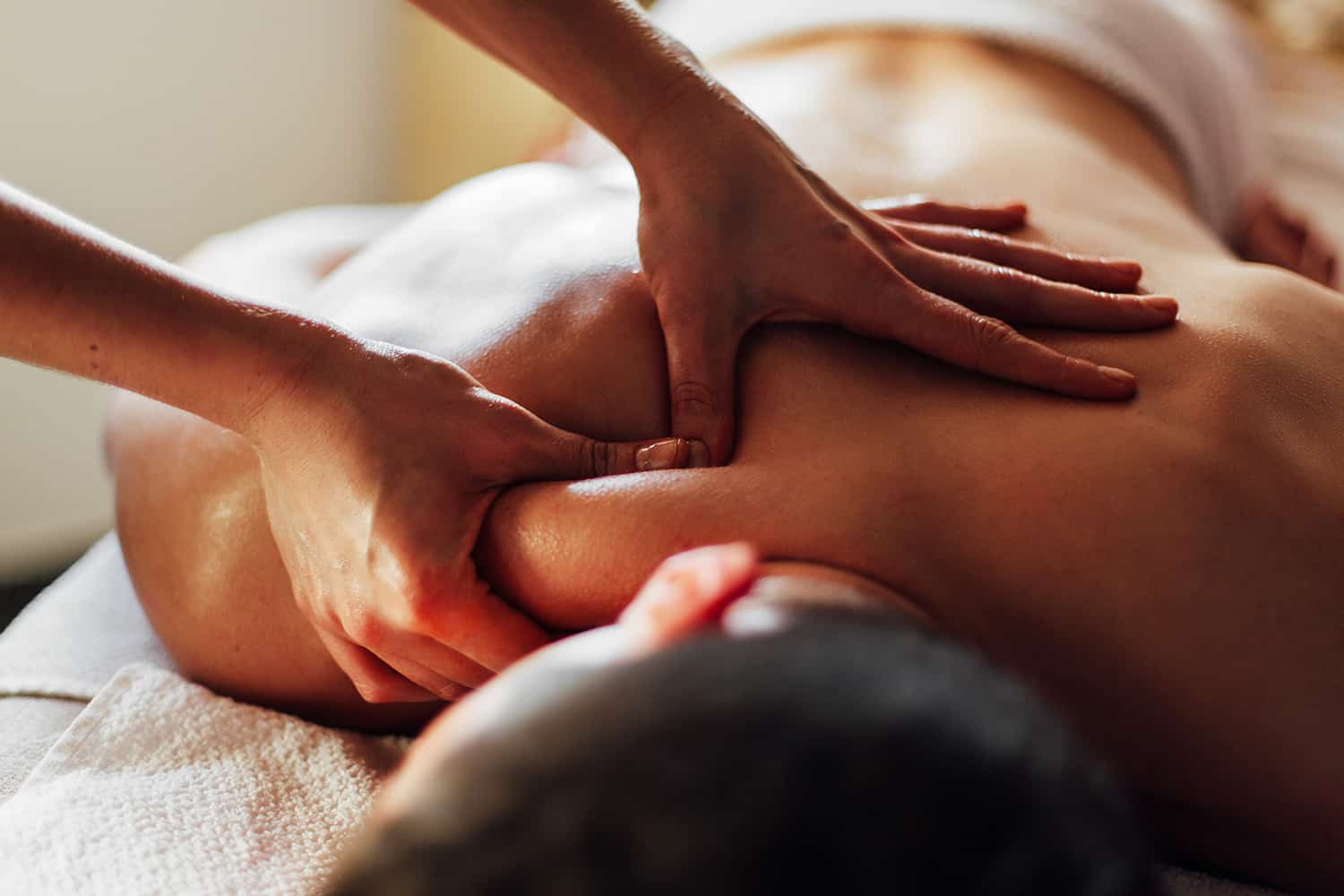
Massage may help manage stiffness and soreness. It can be useful within 24 hours of intense exercise, while a research review found its highest efficacy around 48 hours after a workout. Gentle foam rolling is another active-recovery option; keep pressure comfortable rather than forcing the roller into tender tissue.
DOMS should gradually improve. Seek medical care if soreness lasts more than a week, or sooner if you have severe swelling, unusually dark urine or blood in your urine. These signs need assessment, not massage or rolling.
3. Massage, percussion and foam rolling
Massage may help with relieving muscle soreness after exercise by supporting blood flow and easing tight, tired muscles. It may be useful when soreness makes everyday movement uncomfortable, but it doesn’t repair tissue instantly or replace rest. Keep the pressure comfortable. A session shouldn’t turn a dull ache into sharp or worsening pain.
Timing can make a difference. Massage within 24 hours of intense exercise may help reduce soreness, while a research review found its highest efficacy around 48 hours after a workout. This doesn’t mean you need to wait for a particular moment. Choose gentle pressure that suits your tenderness, and stop if symptoms intensify.
Foam rolling is a self-applied form of pressure for sore muscles. A practical sequence is to roll slowly over a muscle group for 10 to 15 minutes after a workout, then move into gentle stretching. For example, roll the front and back of the thighs without lingering on one tender spot. Ease off if the pressure feels sharp or uncomfortable.
Percussion devices deliver repeated pulses to the body, applying pressure to a smaller area than a foam roller. Start gently and keep the device moving rather than holding it over one spot. Avoid pressing directly on bones or areas of sharp pain. The aim is comfortable contact, not force: percussion is a recovery tool, not a way to push through a possible injury.
Massage, rolling and percussion apply pressure in different ways, so let comfort guide your choice. Protein supports the body’s repair process, while these hands-on methods focus on temporary relief from discomfort and stiffness. Use them alongside rest, not instead of it. If soreness limits movement or worsens rather than easing, pause self-treatment and seek medical advice.
4. Muscle Soreness After a Workout: Can It Be Prevented?
Muscle soreness can’t always be prevented when training challenges the body, but gradual progress can limit its severity. For a new routine, build intensity over time instead of suddenly adding demanding sessions. Someone increasing their running can keep weekly increases to 10% or less. The body can adapt to repeated activity, and soreness may become less frequent over time.
Plan recovery into your schedule. Leave at least one rest day per week and avoid training in the same sport on consecutive days. If you lift weights three times a week, alternating muscle groups gives each area time to recover. Rest days can include gentle movement, but wait until movement feels more comfortable before doing intense exercise with sore muscles. Hydration and enough energy from food support general recovery, but can’t prevent every injury.
Stretching may feel comfortable after exercise, but it isn’t a dependable way to prevent soreness. A Cochrane review of 14 studies found stretching does not meaningfully prevent or reduce post-exercise soreness. A warm-up and sensible increases in workload still help you prepare for activity, but neither guarantees protection from soft-tissue injury.
Pay attention to how soreness changes. Ordinary post-workout aches should ease; soreness that persists beyond three days may mean you’ve overworked your muscles or have an injury. Sharp or shooting pain, painful restricted movement or a changed gait differs from general tenderness. If moving a limb remains painful after a couple of days, pause training and seek medical advice; clinical providers such as bottineauchirorehab.com illustrate how targeted chiropractic care and physical rehabilitation can help evaluate persistent movement issues.
Seek medical care for severe swelling, unusually dark urine or blood in your urine. Soreness lasting a week or more may reflect an injury, such as a muscle strain, rather than routine recovery. Don’t exercise through worsening pain or force a stretch to regain range of motion. Paying attention to these warning signs early can help prevent a small problem from becoming harder to manage.
The Outcall Spa
The Outcall Spa brings professional massage into the comfort of your home or hotel, making a restorative session easier to fit around a busy Singapore schedule. A full-size massage bed, premium oils, branded towels, music and calming scents create a complete spa setting without the journey across town.
For post-workout tension, a therapist can adapt pressure to your comfort during Deep Tissue Massage, Signature Massage, Swedish Massage or Tui Na Massage. Massage may support relaxation and ease stiffness, but it isn’t treatment for an injury or a substitute for medical care. If pain is sharp, worsening or accompanied by swelling, seek medical advice before booking.
If gentle massage feels appropriate for your recovery, contact The Outcall Spa to discuss a session.
Make recovery part of your routine
Let how your body feels guide your next step, rather than pressure to return to training quickly. Relieving muscle soreness after exercise takes a considered approach that leaves room for rest and gentle movement. Treat sharp, worsening or persistent pain as a reason to pause and seek medical advice. Recovery is personal: comfort and safe movement matter more than pushing through.
If a restorative session suits your recovery, The Outcall Spa offers Deep Tissue Massage, Signature Massage and Swedish Massage. A therapist can adapt the session to your comfort, bringing a calm, private spa experience to your home or hotel. Massage may support relaxation, but it isn’t medical care or treatment for an injury.
Contact The Outcall Spa to discuss a session that fits your wellbeing routine. Take recovery at your own pace, and give your body the care it needs to move forward comfortably.
Frequently Asked Questions
Delayed onset muscle soreness: How soon does it set in and how long can it last?
DOMS usually develops after exercise and clears over several days, rather than appearing as sudden pain during a session. Track how the affected area feels during everyday tasks, such as climbing stairs or reaching overhead. Gradually improving comfort and movement are useful signs to note; symptoms that persist or worsen call for medical assessment, not continued training through pain.
How long does muscle recovery take?
Recovery time varies by workout and muscle group. Before returning to hard training, consider whether everyday movement feels comfortable and whether you can perform the exercise with normal control. If stairs are still difficult after a leg session, choose an easier activity or rest instead of repeating intense exercise.
How sore is too sore?
Soreness is too much for training when it changes your movement or makes you compensate to complete an exercise. A zero-to-10 discomfort scale can help you describe its intensity, but use it only as a rough guide; individual symptoms and professional advice should guide decisions about whether to continue. Don’t use a massage or pain relief to mask symptoms so you can continue a session that feels unsafe.
What Is DOMS?
DOMS stands for delayed-onset muscle soreness. It describes a pattern of post-exercise soreness, not proof that a workout was effective or that every new pain is harmless. The term doesn’t diagnose the cause of pain. Consider a sudden or unusual symptom separately instead of automatically labelling it DOMS.
What causes sore muscles after a workout?
Soreness can follow a change in training demand, such as adding a new movement or doing more than usual. Try noting the exercise, the muscles involved and how you feel before your next session. This can help you identify which changes your body tolerates well, without treating soreness as a measure of workout success.
Does lactic acid cause soreness?
No. Lactic acid doesn’t explain soreness that appears later. A burning sensation during a demanding set and tenderness noticed afterwards are different experiences. Note whether discomfort starts during exercise or later, and whether it eases when you stop. This distinction can help you describe the symptom clearly if you need professional advice.